 Sushil Singh 17 April 2026
Oil Filled vs Dry Type Transformer: Full Comparison
Choosing between an Oil Filled vs Dry Type Transformer is one of the most important decisions in any electrical project. Both have unique advantages — and choosing the wrong one can lead to safety risks, higher costs, and maintenance headaches. In this complete guide by Tirupati Transformer, we break down every difference so you can make the right choice.
What is an Oil Filled Transformer?
An oil filled transformer — also called an oil-cooled or oil-immersed transformer — uses mineral oil as both an insulating and cooling medium. The core and windings are completely submerged in transformer oil inside a sealed tank. This design makes it highly efficient for high-capacity outdoor applications.
These transformers are widely used in power distribution, substations, utility grids, and industrial plants where large power loads are involved. For a detailed overview of our products, visit our Oil Filled Transformer product page.
How does it work?
The transformer oil circulates around the core and windings, absorbing heat and dissipating it through the outer tank walls or radiators. The oil also acts as a dielectric (insulating) barrier between the windings, preventing electrical breakdown at high voltages.
What is a Dry Type Transformer?
A dry type transformer uses air as the cooling medium instead of oil. The windings are insulated with epoxy resin or other solid insulating materials. There is no liquid involved, making it safer for indoor environments.
Dry type transformers are the preferred choice for hospitals, shopping malls, high-rise buildings, and data centers. Learn more about our range on our Dry Type Transformer.
Key design features
Epoxy resin cast coil windings give Oil Filled vs Dry Type Transformer excellent resistance to moisture, dust, and partial discharges. They can operate in polluted or humid environments without risk of oil leakage or fire.
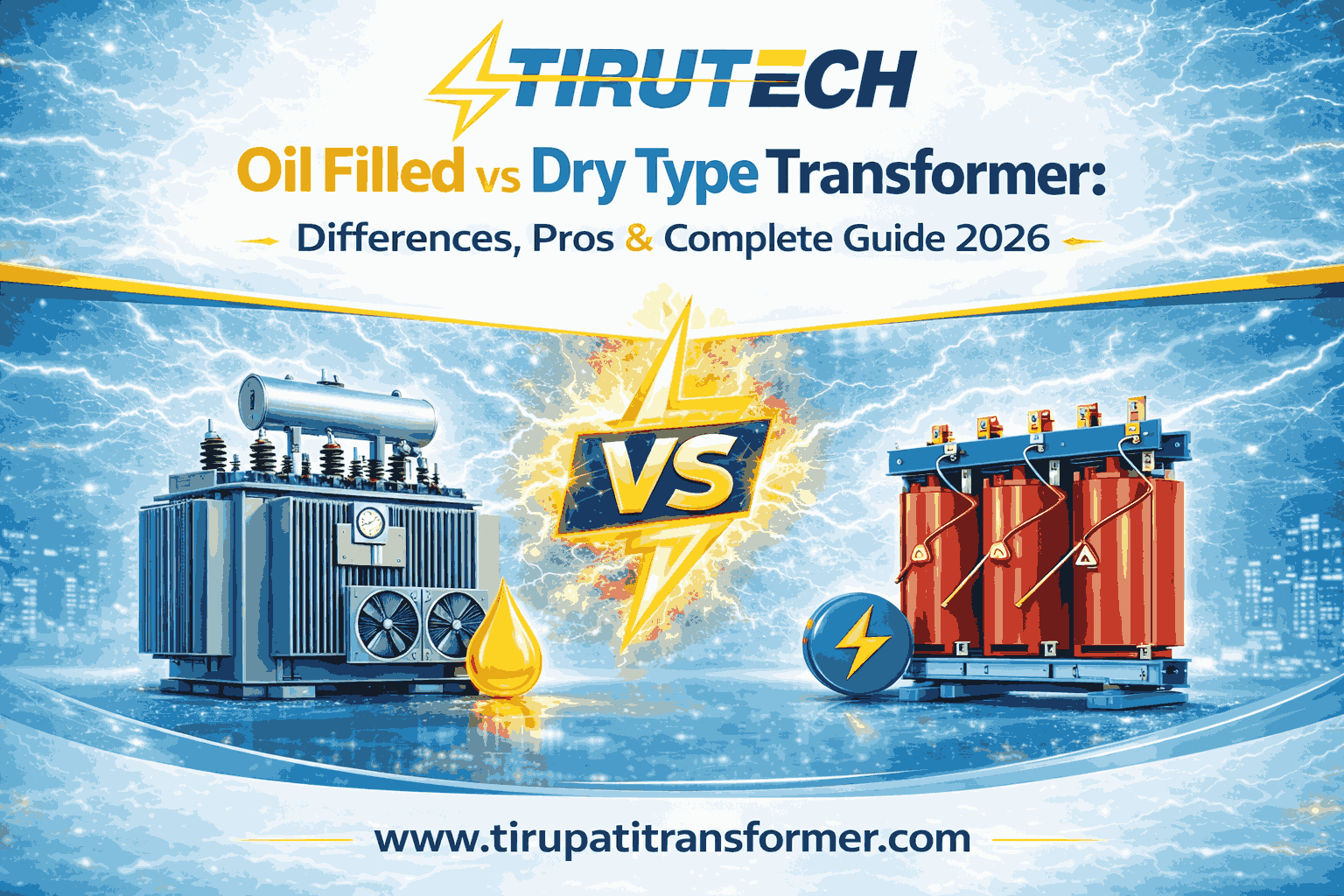
Oil Filled vs Dry Type Transformer: Head-to-Head Comparison
| Parameter | Oil Filled Transformer | Dry Type Transformer |
|---|---|---|
| Cooling Medium | Mineral oil | Air / Epoxy resin |
| Installation | Outdoor / Substation | Indoor only |
| Capacity Range | Up to 500 MVA | Up to 30 MVA |
| Fire Risk | Higher (oil is flammable) | Very low (no oil) |
| Maintenance | Regular oil testing needed | Very low maintenance |
| Cost (Initial) | Lower per KVA | Higher per KVA |
| Lifespan | 25–30 years | 20–25 years |
| Noise Level | Low | Slightly higher |
| Environmental Risk | Oil spill possible | Eco-friendly |
| Best For | Power grids, factories | Hospitals, malls, offices |
Advantages at a Glance
| Oil Filled Transformer | Dry Type Transformer |
| Higher KVA capacity available | No fire or explosion risk |
| Lower cost for large capacity | No oil leakage or spillage |
| Better cooling over long periods | Minimal maintenance needed |
| Longer service life | Safe for populated indoor areas |
| Ideal for rural/outdoor grids | Environmentally friendly |
Applications: Which One Should You Choose?
Choose Oil Filled Transformer when:
You need high voltage power distribution in outdoor substations, industrial plants, utility companies, or rural electrification projects. The lower cost-per-KVA makes it the economical choice for large capacity requirements.
Choose Dry Type Transformer when:
Your application is indoors — hospitals, data centers, high-rise buildings, shopping complexes, or any place where fire safety regulations are strict. The dry type transformer price may be higher, but the safety and maintenance savings justify it.
For expert guidance, read our related article: Different Types of Transformer: Which One is Right for You?
Industry Standards & Safety
Both transformer types must comply with BIS (Bureau of Indian Standards) norms for safety and performance. Oil filled transformers follow IS 1180, while dry type transformers follow IS 11171.
Frequently Asked Questions
Q: Which is better — Oil Filled vs Dry Type Transformer?
It depends on your application. Oil filled transformers are better for high-capacity outdoor use at lower cost. Dry type transformers are better for indoor, fire-sensitive locations with minimal maintenance needs.
Q: What is the lifespan of an oil filled transformer?
An oil filled transformer typically lasts 25–30 years with proper maintenance, including regular oil testing and filtration.
Q: Are dry type transformers more expensive?
Yes, the initial cost of a dry type transformer is higher per KVA compared to oil filled. However, lower maintenance costs often balance this out over the product’s lifespan.
Q: Can I use an oil filled transformer indoors?
Technically possible but not recommended due to fire risk from transformer oil. Indoor installations should use dry type transformers as per safety regulations.
Conclusion
Both Oil Filled vs Dry Type Transformer have their place in the electrical industry. The best choice depends on your specific project requirements, location, budget, and safety standards. We hope this complete comparison guide helped you understand the key differences.
At Tirupati Transformer, we manufacture both types as per IS standards. Reach out to us for a free consultation and customized transformer solution for your project.
Still Confused? Talk to Our Experts!
Tirupati Transformer has been manufacturing high-quality transformers for over 12+ years. Get free technical advice and customized quotes.