- Designed for 100% continuous duty cycle
- Compact design for space saving
- Minimum load losses resulting low power consumption
- Reduction in electricity bill
- Liberal designing & rigorous testing of each equipment
- Negligible Maintenance
- Trouble free operation
- Long service life
- Low production losses and better efficiency
- Easy to install, operate and maintain
- Tailored configuration to meet customer specific requirements
- Low replacement cost of spare parts.
Top 10 Leading Transformer Manufacturers Company in Nigeria
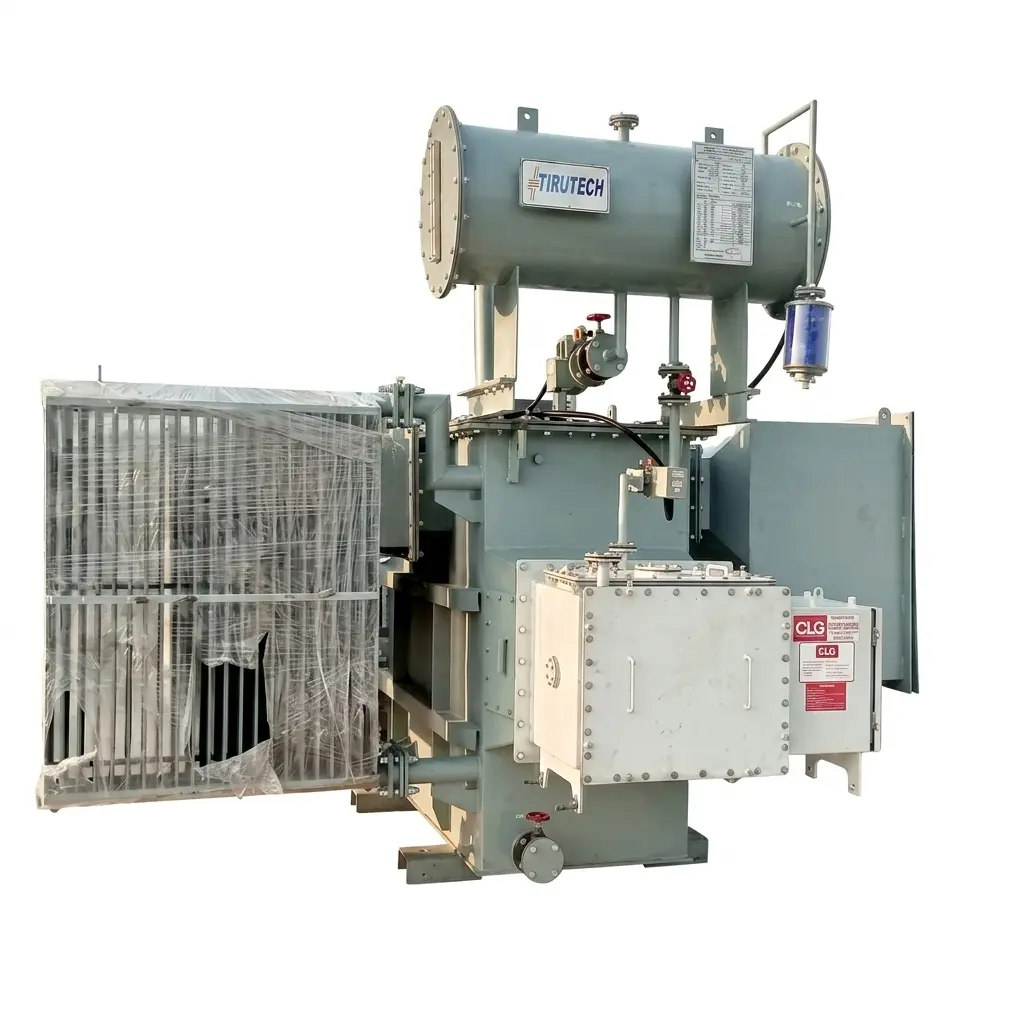
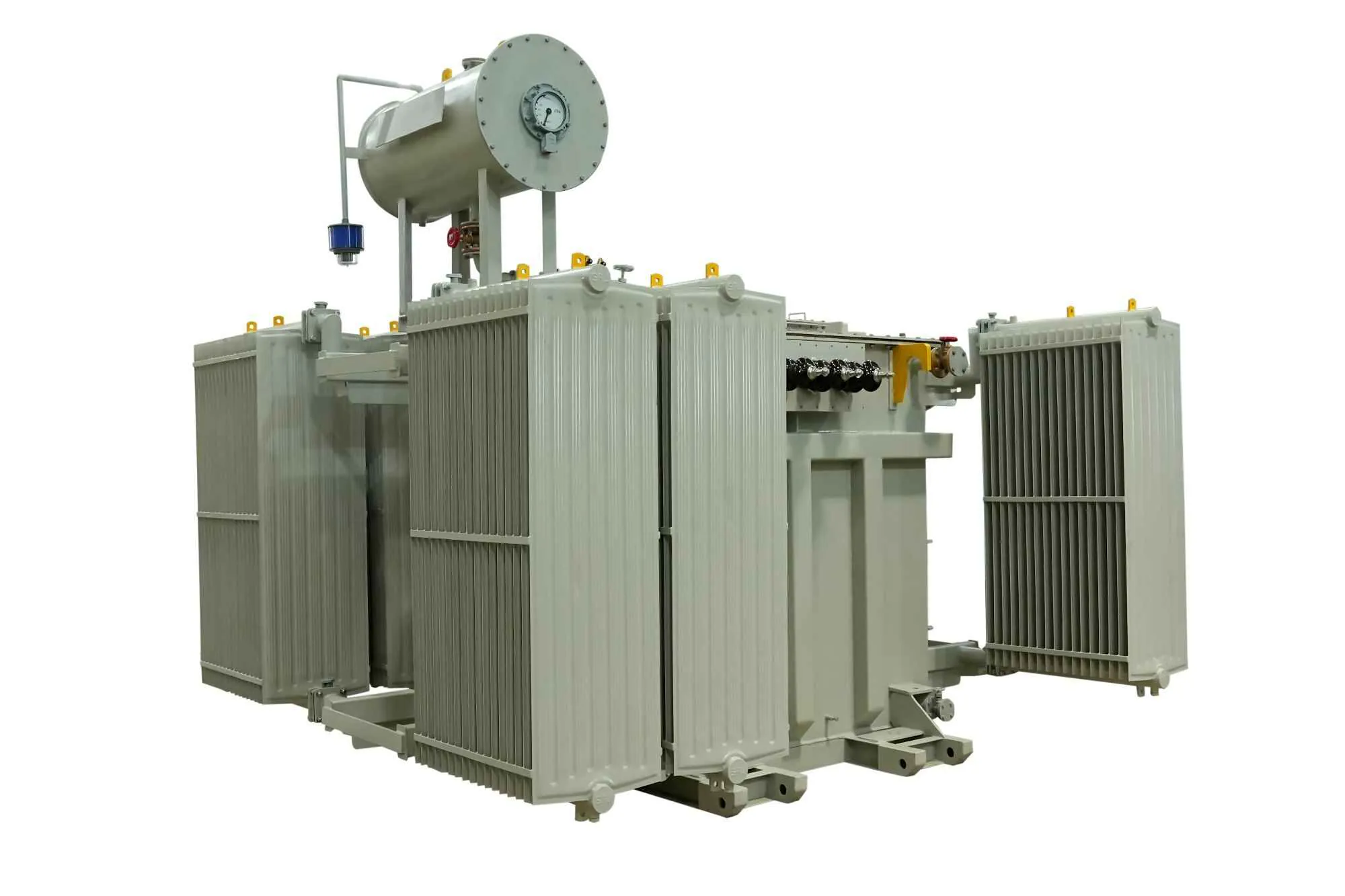
Top 5 Transformer Manufacturers in Nigeria
- DESCRIPTION
Transformer Nigeria — Africa’s Largest Transformer Market, Served Right
Nigeria is Africa’s largest economy, most populous nation, and — by a significant margin — the continent’s biggest market for electrical transformers. With 220 million people, eleven distribution companies managing a grid that supplies power to less than half of what the economy needs, and a generator industry that powers the gap, the demand for transformers in Nigeria spans every sector, every technology, and every voltage level.
From 100 KVA distribution units powering rural communities newly connected through the Rural Electrification Agency to 10 MVA power transformers for the Dangote Refinery in Lekki, from dry type units for Lagos Island’s banking towers to furnace duty transformers for Ajaokuta Steel — Nigeria’s transformer requirement is as diverse as its economy. Tirupati Transformers Pvt. Ltd. manufactures and exports the complete range of transformers to Nigeria — all engineered for Nigerian operating conditions, NERC compliant, and delivered directly to Apapa Port Lagos or Tin Can Island with full DisCo connection documentation.
Whether you are searching for a transformer supplier Nigeria for a single building project or a bulk transformer manufacturer Nigeria partner for a large infrastructure programme, this page gives you everything you need to make the right procurement decision.
Nigeria’s Transformer Market — What Every Buyer Must Understand Before Purchasing
Buying a transformer in Nigeria is more complex than in most African markets — and understanding this complexity is the difference between a successful installation and an expensive procurement mistake.
Nigeria’s 11 DisCo Structure: Nigeria’s electricity distribution is split across eleven Distribution Companies (DisCos) — Ikeja Electric (Lagos mainland), Eko DisCo (Lagos Island/Victoria Island), Abuja DisCo (FCT), Port Harcourt DisCo (Rivers/Bayelsa), Enugu DisCo, Ibadan DisCo, Benin DisCo, Kano DisCo, Kaduna DisCo, Jos DisCo, and Yola DisCo. Each DisCo has its own technical connection requirements, metering standards, and application process for transformer connection approval.
A transformer correctly specified for Ikeja Electric’s network may require additional documentation for Eko DisCo — and Tirupati prepares Nigeria-specific connection documentation tailored to whichever DisCo your project falls under.
NERC Technical Code: Nigeria’s Nigerian Electricity Regulatory Commission (NERC) sets the technical code for all electrical equipment in Nigeria’s power network. Every transformer Nigeria installation must comply with NERC’s Distribution Connection Code — including IEC 60076 type test certification, factory routine test reports, vector group Dyn11 for distribution applications, and 50Hz frequency rating.
NERC enforcement has strengthened significantly since 2021 — non-compliant transformers are refused DisCo connection approval at the metering and energisation stage, causing costly project delays.
Nigeria’s Generator Economy: Unlike stable-grid markets, Nigerian transformer buyers must account for daily generator switching. Every commercial building in Lagos, Abuja, and Port Harcourt switches between DisCo supply and diesel generator power 4 to 8 times daily. A transformer in Nigeria that is not designed for this switching regime — repeated voltage transients, generator harmonic distortion, thermal cycling stress — will age prematurely and fail before its rated service life. Tirupati engineers every transformer for Nigeria with generator-switching tolerance as a standard design requirement.
Import and Port Logistics: Nigeria’s two main port entry points for imported transformers — Apapa Port Lagos and Tin Can Island Port — have specific documentation requirements for electrical equipment imports. Certificate of Origin from the Indian Chamber of Commerce, NAFDAC-exempt status confirmation for electrical equipment, and SON (Standards Organisation of Nigeria) conformity assessment for transformers above certain ratings are required for smooth customs clearance. Tirupati’s Nigeria export team prepares all documentation required for SON (Standards Organisation of Nigeria) compliant clearance.
Nigeria’s Industries and Which Transformer Each One Needs
Nigeria’s economic diversity creates specific transformer requirements that generic suppliers cannot meet. Here is a sector-by-sector breakdown of Nigeria’s transformer market:
Oil and Gas — Niger Delta and Offshore: Nigeria’s oil sector — Shell, TotalEnergies, Chevron, ENI, and indigenous companies in Rivers, Delta, Bayelsa, and Akwa Ibom states — requires transformers built to oil and gas industry standards. Explosion-risk awareness (IEC Ex classification), oil-free dry type units for hazardous indoor locations, and high short-circuit withstand ratings for refinery HV networks. The Dangote Petroleum Refinery at Lekki — Africa’s largest refinery — alone represents one of the largest single transformer Nigeria procurement exercises in the continent’s history.
Cement Industry — Dangote, BUA, Lafarge: Nigeria is Africa’s largest cement producer. Dangote Cement’s plants in Obajana (Kogi), Ibese (Ogun), and Gboko (Benue), BUA Cement in Okpella (Edo), and Lafarge in Ewekoro (Ogun) consume enormous amounts of electrical energy through large power and furnace transformers. Kiln drive transformers, raw mill transformers, and distribution transformers for plant auxiliaries are all in continuous demand from Nigeria’s cement sector.
Telecoms — MTN, Airtel, Glo, 9mobile: Nigeria’s telecoms industry — the largest in Africa — operates hundreds of thousands of base stations across the country, many of them powered by hybrid solar-generator systems with transformers for grid connection where available. MTN Nigeria, Airtel Nigeria, Glo, and 9mobile are consistent buyers of compact, reliable transformers for telecoms infrastructure.
Real Estate and Construction — Lagos, Abuja, PH: Nigeria’s construction boom — driven by Eko Atlantic City in Lagos, the ongoing FCT development in Abuja, and the GRA expansion in Port Harcourt — requires transformers for every new building’s electrical infrastructure. Distribution transformers for outdoor substations, dry type units for indoor electrical rooms, and compact substations for space-constrained urban developments.
Agriculture and Food Processing: Nigeria’s agricultural processing sector — Flour Mills of Nigeria, Dangote Sugar at Apapa, NASCON, and numerous state-based processing facilities — requires reliable distribution and power transformers for milling, refining, and packaging operations running on both grid and generator supply.
Solar and Renewable Energy: Nigeria’s rapidly growing off-grid solar sector — mini-grids in rural states, commercial rooftop solar in Lagos and Abuja — uses solar inverter duty transformers to connect generation to consumption points. Nigeria’s Rural Electrification Agency (REA) mini-grid projects specifically require solar-compatible transformer specifications.
Tirupati — Your Complete Transformer Supplier Nigeria — Factory Direct
Tirupati Transformers Pvt. Ltd. exports a complete range of transformers to Nigeria — every type, every voltage, every application — manufactured in our ISO-certified India facility and delivered factory-direct to Nigerian buyers. No Nigerian trading intermediaries. No markup chain. You get manufacturer pricing, manufacturer accountability, and manufacturer engineering support for every transformer Nigeria project.
Distribution Transformer Nigeria
Our distribution transformers are the most widely purchased transformer Nigeria product — stepping down DisCo 11kV and 33kV supply to 415V or 240V for end users. From 100 KVA for REA rural electrification projects to 10 MVA for large industrial estates in Lagos, Kano, and Port Harcourt. Every unit ships with NERC-format test documentation and the correct DisCo connection datasheet for your specific Nigerian location. Key trending search: distribution transformer price Nigeria, buy distribution transformer Lagos.
Power Transformer Nigeria
Our power transformers serve Nigeria’s high-voltage transmission and large industrial requirements — up to 10 MVA, voltage levels from 33kV to 132kV. Used in TCN (Transmission Company of Nigeria) substations, Dangote Refinery infrastructure, cement plant HV supplies, and large industrial parks. Key trending search: power transformer supplier Nigeria, 33kV transformer Nigeria.
Dry Type Transformer Nigeria
Our dry type transformers for Nigeria — epoxy cast resin and VPI — are the fire-safe, oil-free solution for Lagos’s commercial towers, Abuja’s government buildings, Port Harcourt’s oil facilities, and any indoor installation where generator switching stress and fire safety are primary concerns. K-Factor rated for Nigeria’s generator harmonic environment. Key trending search: dry type transformer Lagos, fire safe transformer Nigeria.
Cast Resin Transformer Nigeria
Our cast resin transformers offer maximum environmental protection — fully encapsulated windings with zero liquid insulation. The top choice for Nigeria’s Niger Delta humidity, Port Harcourt’s oil sector classified areas, and Lagos’s coastal commercial district where moisture and salt air accelerate standard insulation degradation. Key trending search: cast resin transformer Nigeria, epoxy transformer Lagos.
Compact Substation Nigeria
Our compact substations — transformer, HV switchgear, and LV panel in one weatherproof unit — serve Nigeria’s space-constrained urban developments, PHCN replacement projects, and housing estate power supply where a full substation yard is not feasible in Lagos, Abuja, or PH. Key trending search: compact substation Nigeria, package substation Lagos.
Solar Inverter Duty Transformer Nigeria
Nigeria’s off-grid and on-grid solar sector is growing rapidly. Our solar inverter duty transformers connect solar farms, commercial rooftop systems, and REA mini-grid projects to Nigeria’s grid — handling inverter harmonic output that standard distribution transformers cannot tolerate long-term. Key trending search: solar transformer Nigeria, inverter duty transformer Lagos.
Furnace Duty Transformer Nigeria
Our furnace duty transformers serve Nigeria’s steel and metals sector — Ajaokuta Steel, Delta Steel Warri, and industrial furnace operations requiring continuous heavy-duty transformer performance with high short-circuit withstand and tap changer range for electrode regulation.
Servo Voltage Stabilizer Nigeria
Nigeria’s chronic voltage fluctuation — particularly during generator switching and DisCo supply quality variations — damages sensitive equipment in hospitals, labs, and manufacturing facilities. Our servo voltage stabilizers maintain stable output regardless of Nigerian supply variations — a critical protection investment for any Nigeria facility running sensitive loads.
Why Nigerian Buyers Choose Tirupati as Their Transformer Supplier Nigeria
NERC and DisCo Documentation — First-Time Approval: Every transformer Nigeria project hitting a DisCo connection delay costs money. Tirupati prepares NERC-format technical submittals, DisCo-specific connection datasheets, and IEC 60076 test reports that satisfy all eleven Nigerian DisCos’ connection approval requirements — on first submission, without revision requests.
SON Conformity Assessment Support: Nigeria’s Standards Organisation of Nigeria (SON) requires conformity assessment for electrical equipment imports above specific ratings. Tirupati’s export team coordinates SON pre-shipment inspection through approved inspection bodies — SGS, Bureau Veritas, or Intertek — ensuring transformer Nigeria shipments clear Apapa Port customs without detention.
Generator-Switching Engineering as Standard: Unlike suppliers who ship standard catalogue units to Nigeria, Tirupati designs every transformer for Nigeria with generator switching tolerance — appropriate insulation class, thermal headroom for ambient, and where required, K-Factor harmonic rating for generator-connected loads. This is not an option — it is our standard approach for every transformer Nigeria export.
Apapa Port Delivery Experience: Apapa Port Lagos is notorious for congestion and documentation issues. Tirupati’s Nigeria export team has established relationships with freight forwarders and clearing agents at Apapa — ensuring transformer Nigeria shipments move through port efficiently. We also ship through Tin Can Island Port for Lagos projects where container slot availability is better.
Factory-Direct Transformer Price Nigeria: The transformer price Nigeria buyers pay through local trading companies includes multiple layers of markup — importer margin, local agent margin, and warehouse handling. Tirupati’s factory-direct model eliminates every one of these margins. Nigerian buyers sourcing transformers directly from Tirupati consistently pay 15 to 30% less than equivalent trading company quotations for the same technical specification.
According to IEC international standards and Bureau of Indian Standards (BIS), transformer quality is only guaranteed when manufacturing follows accredited ISO quality systems — which every transformer Nigeria shipment from Tirupati carries as standard.
FAQs — Transformer Nigeria
Q1. How do I ensure a transformer purchased for Nigeria will get DisCo connection approval?
DisCo connection approval for a transformer in Nigeria requires submission of: IEC 60076 type test report from an accredited test laboratory, factory routine test certificate specific to the purchased unit, technical datasheet with full nameplate data in NERC format, vector group Dyn11 confirmation, HV-side metering CT specifications, and a protection relay coordination datasheet. The most common reason Nigerian buyers face DisCo connection rejection is submitting generic type test reports rather than unit-specific routine test certificates.
Every transformer Nigeria Tirupati exports comes with a unit-specific routine test certificate with the transformer’s serial number — satisfying all eleven Nigerian DisCos’ connection documentation requirements. We also tailor the technical datasheet format to match whichever DisCo — Ikeja Electric, Eko DisCo, Abuja DisCo, Port Harcourt DisCo, or any other — your project falls under.
Q2. What transformer specifications does Nigeria’s oil and gas sector require?
Transformers for Nigeria’s oil and gas sector — Shell, TotalEnergies, Chevron, ENI, and indigenous companies operating in the Niger Delta states — must meet requirements that go well beyond standard NERC distribution code: IEC Ex or ATEX area classification compliance for transformers near hydrocarbon equipment, enhanced short-circuit withstand ratings for refinery HV networks (typically 250 MVA fault level), oil-free construction (dry type or cast resin) for indoor classified areas, specific terminal marking systems matching oil company engineering documentation standards, and seismic qualification for offshore-adjacent onshore installations.
Transformer Nigeria procurement for oil sector projects typically also requires Factory Acceptance Testing (FAT) witnessed by the oil company’s inspection team. Tirupati has the engineering capability and documentation infrastructure to meet all of these requirements for Nigeria’s oil and gas transformer procurement.
Q3. What is the transformer price in Nigeria and what drives the cost?
The transformer price Nigeria buyers pay depends on five main factors: type (distribution, power, dry type, cast resin, furnace duty), KVA or MVA rating, voltage configuration (11kV, 33kV, 132kV), cooling method (ONAN, ONAF), and quantity ordered. Tirupati’s factory-direct transformer price Nigeria is typically 15 to 30% lower than what Nigerian buyers pay through local importing companies for equivalent technical specifications — because our pricing carries no importer margin, no local agent markup, and no warehouse handling charge.
For a transparent transformer Nigeria price comparison, share your technical specification with our sales team and receive a factory quotation within 24 hours alongside a full breakdown of shipping costs to Apapa Port Lagos.
Q4. How does SON (Standards Organisation of Nigeria) conformity assessment work for imported transformers?
Nigeria’s Standards Organisation of Nigeria (SON) requires pre-shipment conformity assessment for electrical equipment — including transformers — imported into Nigeria above specified ratings. The process involves: SON registration of the product and manufacturer, appointment of a SON-approved inspection body (SGS, Bureau Veritas, or Intertek) for factory or pre-shipment inspection, issuance of a SONCAP (SON Conformity Assessment Programme) certificate, and submission of the SONCAP certificate to Nigeria Customs for clearance.
Tirupati’s export team manages the entire SON conformity assessment process for every transformer Nigeria shipment — coordinating with approved inspection bodies, providing the required technical documentation, and ensuring the SONCAP certificate is ready before the shipment reaches Apapa Port. Nigerian buyers who source transformers without SONCAP documentation face port detention and significant demurrage costs.
Q5. What is the complete delivery timeline for a transformer to Nigeria?
The complete timeline for a transformer Nigeria order from Tirupati covers: engineering review and Nigeria-specific design (1 week), manufacturing (4 to 10 weeks depending on rating — distribution transformers faster, large power transformers longer), factory testing with NERC-format documentation (1 week), SON conformity assessment coordination (parallel with manufacturing — 2 to 3 weeks), export documentation preparation including Indian Chamber of Commerce Certificate of Origin (1 week), sea freight from JNPT Mumbai or Mundra port to Apapa Port Lagos or Tin Can Island (18 to 22 days transit), SON/Nigeria Customs clearance (1 to 2 weeks), and inland delivery to project site.
Total timeline from confirmed order to transformer on-site in Lagos: 9 to 14 weeks for standard distribution units, 14 to 20 weeks for large power transformers. Tirupati provides milestone updates at every stage — manufacturing completion, inspection clearance, vessel booking, port arrival, and customs clearance — so Nigerian project managers always know exactly where their Transformer Nigeria order stands.
Get Your Transformer Nigeria Quotation — Factory Direct, 24 Hour Response
Nigeria’s infrastructure development does not slow down for procurement delays — and neither should your transformer sourcing process. Share your transformer type, KVA or MVA rating, primary and secondary voltage, DisCo connection details (which DisCo, which state), cooling preference, quantity, and Lagos or project site delivery address. Tirupati Transformers responds within 24 hours with a complete factory quotation, NERC-format technical datasheet, SON assessment timeline, and shipping schedule to Apapa Port or Tin Can Island.
Whether you need a transformer supplier Nigeria for a single distribution unit or a long-term transformer manufacturer Nigeria partner for a large infrastructure programme, Tirupati delivers the factory-direct quality, documentation, and logistics support that Nigerian project success requires. Contact Us for Transformer Nigeria Project Inquiry
- Routine Measurements and TestsRoutine tests shall be carried out on all transformers conducted accordance with standards as applicable. The following routine measurements and tests shall be carried out:
- Measurement of winding resistance
- Measurement of voltage ratio and check of polarity and vector group
- Measurement of impedance voltages
- Measurement of load losses
- Measurement of no load losses and no load current
- Measurement of harmonics induced overvoltage withstand test
- Separate source voltage-withstand tests on HV and LV windings
- Bushing routine tests
- Oil Leakage Test
- Relief Device Test
- Dielectric Routine Tests
- Galvanizing Tests
- Magnetic Balance Tests
- Induced over voltage withstand Tests
- Tap changer Tests
- Oil Tests.
- Fittings and AccessoriesWe provide following fittings and accessories with all transformers:
- Oil Temperature Indicator (OTI)
- Winding Temperature Indicator (WTI)
- Magnetic Oil-level Gauge (MOG)
- Pressure Relief Device (PRD)
- Marshalling Box
- Forced Fan Cooling
- OLTC & RTCC Panel with AVR
- Bi-directional Rollers
- Radiator Valves
- Dehydrating Breather
- Current Transformer
- Additional Neutral Terminal.
- TECHNICAL SPECIFICATION
Brand Tirupati Transformer Rating Upto 10 MVA Applicable Standards IS, IEC, BIS etc. Cooling ONAN, ONAF Insulating Fluid Mineral Oil To Specification Frequency 50 Hz, 60 Hz Primary Voltage 11KV/ 22 KV/ 33 KV Winding Material Copper ping On Load Tap Changer, Off Circuit Tap Changer Impedance Upto 8.35%, tolerance +10% Insulation Class ‘A’ Rated Voltage HV 33 KV LV 11 KV Highest Continuous system voltage Maximum system voltage ration (HV/LV) 36 KV / 12 KV Rated Voltage Ration (HV/LV) 36 KV / 11 KV Method of Connection HV Delta LV Star