| Parameter | Specification |
|---|---|
| Type | Compact Substation / CSS |
| Capacity | 100–2500 kVA* |
| MV Voltage | 11 / 22 / 33 kV* |
| LV Voltage | 400 / 415 / 433 / 440 V* |
| Transformer | Oil / Dry Type* |
| MV Switchgear | RMU / VCB* |
| LV Incomer | ACB / MCCB* |
| Installation | Indoor / Outdoor* |
| Standards | Applicable IEC / IS |
| Application | Industrial, Commercial & Utility Power Distribution* |
Compact Substation Manufacturer in India
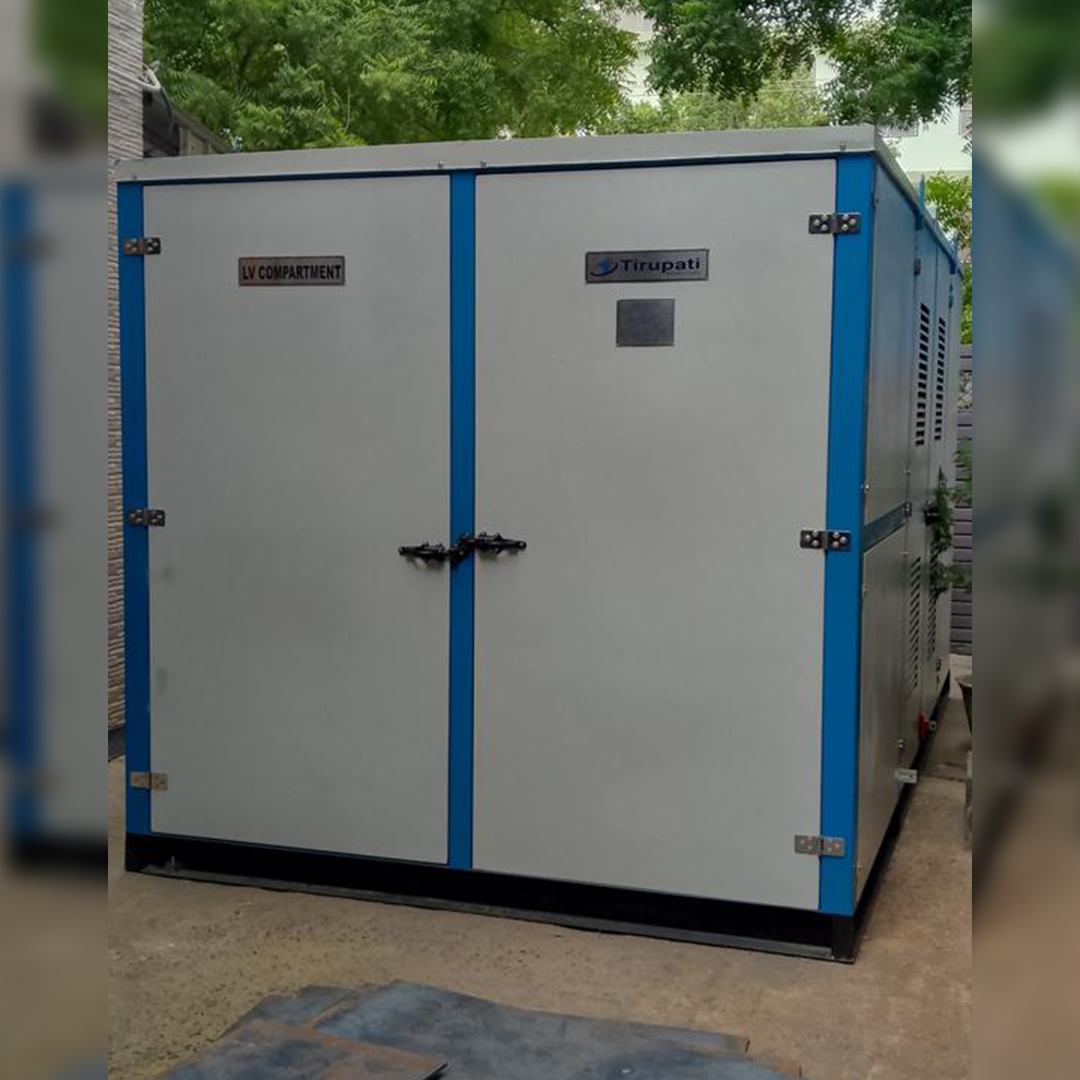
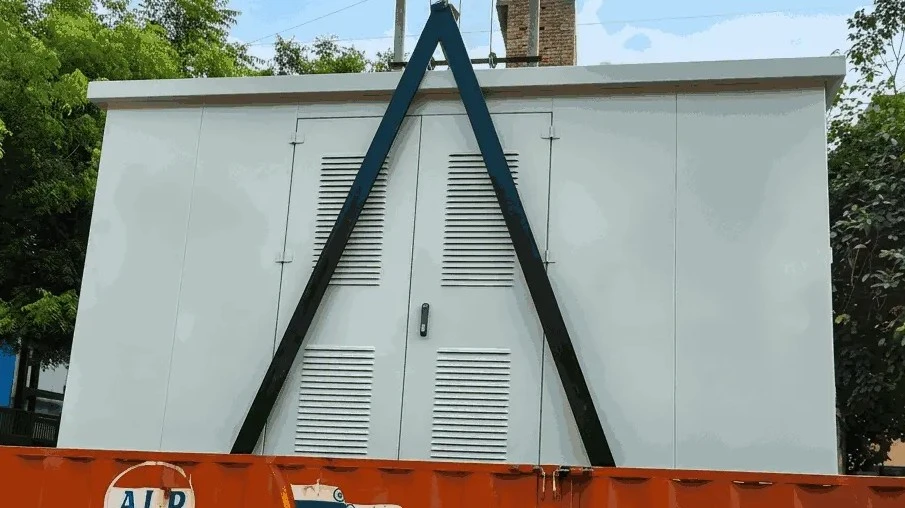
- DESCRIPTION
Compact Substation Manufacturer in India | Compact Substation for Reliable, Space-Saving Power Distribution
A Compact Substation is a factory-assembled power distribution system that combines medium-voltage switchgear, a distribution transformer and a low-voltage switchboard within a single integrated enclosure. This configuration provides a practical alternative to separately installed substation equipment where space, installation time, safety and maintainability are important considerations.
Tirupati Transformer manufactures and supplies customized Compact Substation solutions for industrial plants, commercial buildings, residential developments, infrastructure projects, renewable energy installations and utility applications across India.
Our Compact Substation systems are engineered according to project-specific electrical requirements, including transformer capacity, voltage level, MV switching arrangement, LV feeder configuration, protection requirements, enclosure design, cable entry and installation environment.
For prefabricated substations, IEC 62271-202:2022 defines service conditions, rated characteristics, structural requirements and test methods for enclosed high-voltage prefabricated substations. Final design, component selection and applicable standards should always be established according to the project specification and installation conditions.
What Is a Compact Substation?
A Compact Substation, also called a CSS, Unitized Substation, Packaged Substation or Prefabricated Substation, is an integrated electrical distribution unit designed to transform medium-voltage electrical power into low-voltage power for downstream loads.
Instead of installing the MV switchgear, transformer and LV distribution equipment as separate assemblies, a Compact Substation brings the major components together in a purpose-designed enclosure.
A typical Compact Substation consists of:
- MV Switchgear / RMU for incoming supply switching and protection
- Distribution Transformer for voltage transformation
- LV Switchboard for low-voltage power distribution
- Protection and Metering Equipment as required
- Interconnections and Busbars
- Earthing Arrangement
- Ventilation and enclosure system
- Cable entry and termination provisions
The equipment is arranged in segregated compartments to support safe operation, inspection and maintenance.
For applications requiring a separate transformer solution, explore our Distribution Transformer range.
How Does a Compact Substation Work?
The operating sequence of a Compact Substation is straightforward:
MV Incoming Supply → MV Switchgear → Transformer → LV Switchboard → Outgoing Feeders → Electrical Loads
The incoming medium-voltage supply first reaches the MV switchgear. The switchgear provides the required switching and protection functions before the electrical energy reaches the transformer.
The transformer then steps down the voltage to the required low-voltage level. The transformed supply is connected to the LV switchboard through suitable busbar or cable interconnections.
The LV switchboard distributes electrical power through multiple outgoing feeders to factories, buildings, machinery, infrastructure systems or other connected loads.
This integrated arrangement reduces the need to coordinate multiple separately installed electrical assemblies at site.
Main Components of a Compact Substation
1. MV Switchgear Compartment
The MV section is responsible for incoming supply switching, isolation and protection.
Depending on the project requirement, the MV compartment can be configured with equipment such as:
- Ring Main Unit (RMU)
- Vacuum Circuit Breaker (VCB)
- Load Break Switch
- Fuse-switch combination
- Protection relays
- Voltage presence indication
- Earth fault indication
- Interlocking and safety arrangements
- Earthing switch
- Cable termination provisions
The final MV configuration depends on the system voltage, fault level, protection philosophy and utility/project requirements.
2. Transformer Compartment
The transformer forms the central power-conversion section of the Compact Substation.
Tirupati Transformer can engineer Compact Substation configurations using suitable transformer technology according to the application.
Typical considerations include:
- Transformer capacity
- Primary voltage
- Secondary voltage
- Frequency
- Vector group
- Impedance
- Cooling arrangement
- Tap-changing requirement
- Insulation level
- Loss requirements
- Ambient temperature
- Installation environment
For oil-immersed distribution applications, transformer design should be selected according to the applicable Indian and project standards. BIS documentation identifies IS 1180 as an important standard series for distribution transformers in India.
3. LV Switchboard Compartment
The LV section receives power from the transformer secondary and distributes it to the required outgoing circuits.
The LV panel can be configured with:
- ACB or MCCB incomer
- Busbars
- MCCB outgoing feeders
- Fuse-protected feeders
- Metering
- Current transformers
- Protection devices
- Cable termination facilities
- Auxiliary supply
- Indication and monitoring equipment
The number, rating and type of outgoing feeders can be customized according to the load schedule.
Compact Substation Voltage and Capacity Options
Tirupati Transformer can engineer Compact Substation systems for commonly required distribution applications.
Depending on the project, configurations can include:
- 11 kV Compact Substation
- 22 kV Compact Substation
- 33 kV Compact Substation
- 100 kVA Compact Substation
- 250 kVA Compact Substation
- 500 kVA Compact Substation
- 630 kVA Compact Substation
- 1000 kVA Compact Substation
- 1250 kVA Compact Substation
- 1600 kVA Compact Substation
- 2000 kVA Compact Substation
- 2500 kVA Compact Substation
Higher or special configurations can be evaluated according to the electrical design, equipment availability and project specification.
Types of Compact Substation
The correct Compact Substation configuration depends on where it will be installed, the environmental conditions and the electrical system.
1. Outdoor Compact Substation
An outdoor Compact Substation is designed for installation outside a dedicated electrical building.
Typical applications include:
- Industrial plants
- Manufacturing facilities
- Solar power projects
- Infrastructure projects
- Utility distribution
- Commercial developments
- Construction and expansion projects
The enclosure design should account for rain, dust, solar radiation, ambient temperature, corrosion and ventilation.
2. Indoor Compact Substation
Indoor Compact Substations can be considered where the electrical installation is located inside a dedicated electrical room or protected building environment.
They can be suitable for:
- Commercial buildings
- Industrial plants
- Metro and infrastructure facilities
- Data centres
- Hospitals
- Large buildings
- Process industries
Indoor installations require proper ventilation, access clearance, fire-safety planning and coordination with the building electrical design.
3. Oil-Immersed Compact Substation
An oil-immersed transformer can be integrated into a Compact Substation where the project permits liquid-immersed transformer technology.
The design should consider:
- Transformer oil containment
- Ventilation
- Fire-safety requirements
- Maintenance access
- Transformer protection
- Environmental conditions
4. Dry-Type Compact Substation
Dry-type transformer technology can be considered where oil-free operation, fire safety and indoor installation are important.
Applications may include:
- Hospitals
- Metro stations
- Commercial buildings
- Data centres
- Airports
- High-rise buildings
- Sensitive industrial environments
For dry-type transformer requirements, you can also explore our Cast Resin Transformer solutions.
Why Choose a Compact Substation?
1. Space-Efficient Electrical Design
A Compact Substation combines major substation equipment within an engineered footprint. This can be particularly valuable where land availability is limited or electrical equipment needs to be located close to the load centre.
2. Faster Site Installation
Because major equipment is assembled and tested before dispatch, site installation can be more streamlined than assembling multiple independent equipment packages.
However, a Compact Substation still requires suitable civil foundation, cable routing, earthing and site preparation according to the approved design.
3. Integrated Equipment
MV switchgear, transformer and LV distribution equipment are coordinated as one system rather than treated as completely independent assemblies.
This can simplify:
- Equipment coordination
- Cable planning
- Space allocation
- Site installation
- Maintenance access
- Project documentation
4. Improved Personnel Safety
Segregated compartments, lockable access doors, interlocking arrangements and controlled access to electrical equipment can improve operational safety when properly engineered and maintained.
5. Reduced Civil Footprint
The compact architecture can reduce the space required for electrical equipment compared with some conventional substation layouts.
The actual civil requirement depends on transformer type, equipment dimensions, cable entry, access clearance, ventilation, fire-safety requirements and site conditions.
6. Customized Configuration
A Compact Substation should not be treated as a one-size-fits-all product.
Tirupati Transformer can customize the configuration based on:
- Transformer rating
- MV voltage
- LV voltage
- Number of feeders
- Incomer rating
- Protection scheme
- Metering requirements
- Cable entry
- Enclosure requirements
- Installation environment
- Utility requirements
Compact Substation vs Conventional Substation
Parameter Compact Substation Conventional Substation Construction Integrated / factory-assembled Multiple equipment assemblies Space Requirement Generally lower Generally higher Site Assembly Reduced More extensive Installation Time Potentially shorter Usually longer Equipment Arrangement Integrated enclosure Separate equipment Maintenance Access Compartment-based Equipment-specific Customization Project-specific Project-specific Civil Work Foundation and site preparation required Generally more extensive Best Use Space-constrained and distributed applications Larger conventional layouts The correct selection depends on load, voltage, fault level, site conditions, accessibility, safety requirements, utility specifications and lifecycle considerations.
Applications of Compact Substation in India
Compact Substations are used wherever electrical power needs to be distributed safely and efficiently within a relatively controlled footprint.
Industrial Applications
Compact Substation systems can be used for:
- Manufacturing plants
- Steel plants
- Cement plants
- Automobile industries
- Chemical industries
- Pharmaceutical plants
- Food-processing facilities
- Engineering industries
- Industrial estates
- Warehouses
Commercial Applications
Typical commercial applications include:
- Shopping malls
- Office complexes
- IT parks
- Business parks
- Hotels
- Residential townships
- High-rise developments
- Commercial buildings
Infrastructure Applications
Compact Substations can support electrical distribution for:
- Airports
- Metro projects
- Rail infrastructure
- Highways
- Smart-city projects
- Public infrastructure
- Large construction developments
Renewable Energy Applications
Compact Substations can also be integrated into renewable-energy electrical systems, subject to the project’s voltage transformation and grid-interconnection requirements.
Applications include:
- Solar power plants
- Rooftop solar installations
- Renewable-energy parks
- Solar industrial projects
- Hybrid renewable-energy systems
For solar applications, explore our Solar Inverter Duty Transformer.
Compact Substation Manufacturer in India – Why Tirupati Transformer?
Tirupati Transformer Pvt. Ltd. is an ISO 9001:2015 certified, BIS licensed transformer manufacturer based in Greater Noida, Uttar Pradesh. The company was established in 2014 and manufactures transformer and power-distribution solutions for industrial, infrastructure, utility and renewable-energy applications.
Our manufacturing and engineering capabilities support project-specific transformer requirements rather than relying only on standard catalogue configurations.
What You Get from Tirupati Transformer
- Factory-engineered Compact Substation solutions
- Customized transformer ratings
- MV and LV equipment integration
- Project-specific feeder configuration
- Technical documentation
- Quality inspection and testing
- Application-based engineering support
- Factory-direct manufacturer communication
- Pan-India supply
- After-sales technical support
Our broader product portfolio includes Power Transformers, Distribution Transformers, Cast Resin Transformers, VPI Transformers and Solar Inverter Duty Transformers.
Quality, Testing and Documentation
For a Compact Substation project, product quality is not limited to the transformer alone. The complete assembly, electrical connections, protection system, enclosure and documentation should be reviewed against the approved project specification.
Depending on the project, documentation may include:
- General Arrangement Drawing
- Single Line Diagram
- Technical Datasheet
- Bill of Materials
- Transformer test reports
- Routine test reports
- Applicable certificates
- Protection and control details
- Operation and Maintenance Manual
- Warranty documentation
Applicable routine and type/special testing requirements should be established from the relevant standards and purchase specification.
For prefabricated high-voltage substations, IEC 62271-202:2022 is the relevant international standard covering service conditions, rated characteristics, structural requirements and test methods for enclosed high-voltage prefabricated substations.
For distribution transformers in India, the Bureau of Indian Standards identifies the IS 1180 series for distribution transformers, including mineral-oil and ester-liquid immersed transformer categories.
How to Select the Right Compact Substation?
Choosing a Compact Substation should start with the electrical load and network requirements rather than simply selecting a transformer capacity.
Before requesting a quotation, define:
1. Required Transformer Capacity
Specify the required kVA/MVA rating and expected load profile.
2. Primary Voltage
Common distribution levels include:
- 11 kV
- 22 kV
- 33 kV
The actual voltage should be confirmed from the incoming electrical network.
3. Secondary Voltage
Common LV requirements include:
- 400 V
- 415 V
- 433 V
- 440 V
4. Transformer Technology
Select oil-immersed or dry-type construction according to:
- Installation location
- Fire-safety requirements
- Environmental conditions
- Maintenance philosophy
- Utility/project specification
5. MV Protection
The MV protection arrangement should be selected according to:
- Fault level
- Transformer rating
- Network configuration
- Utility requirements
- Protection coordination
6. LV Feeder Requirement
Provide the number and rating of outgoing feeders along with the connected load.
7. Installation Environment
Consider:
- Indoor or outdoor installation
- Ambient temperature
- Humidity
- Dust
- Corrosive atmosphere
- Solar radiation
- Altitude
- Accessibility
- Ventilation
8. Cable Entry
Cable entry direction and termination arrangement should be finalized during engineering so that the enclosure and internal layout are coordinated correctly.
Compact Substation Price in India
There is no single standard Compact Substation price in India because the final cost depends on the complete electrical configuration.
The major price factors include:
- Transformer capacity
- Primary and secondary voltage
- Transformer technology
- MV switchgear type
- VCB/RMU configuration
- LV incomer rating
- Number of outgoing feeders
- Busbar rating
- Protection relays
- Metering equipment
- Enclosure dimensions
- IP/environmental requirements
- Tap changer
- Cable termination arrangement
- Testing requirements
- Documentation
- Transportation
- Installation and commissioning requirements
For this reason, comparing Compact Substation prices only by kVA can result in an inaccurate comparison.
For an accurate quotation, provide the transformer rating, HV/LV voltage, number of LV feeders, installation location and project specification.
Compact Substation Maintenance
A Compact Substation is designed to simplify the overall electrical arrangement, but routine inspection and preventive maintenance remain important.
A typical maintenance program may include:
- Visual inspection of enclosure
- Checking door locks and interlocks
- Inspection of earthing connections
- MV switchgear inspection
- Transformer condition monitoring
- Checking abnormal noise or temperature
- LV panel inspection
- Busbar and termination inspection
- Protection-system verification
- Cleaning and ventilation inspection
- Checking signs of moisture or corrosion
- Periodic electrical testing as specified by the maintenance program
The exact maintenance interval should be based on equipment type, operating conditions, manufacturer instructions and applicable standards.
Compact Substation for Industrial Projects
Industrial facilities often require reliable electrical distribution close to manufacturing loads. A Compact Substation can help integrate the incoming MV system, transformer and LV distribution equipment into one coordinated package.
For industrial projects, engineering should consider:
- Maximum demand
- Motor starting loads
- Harmonic-producing equipment
- Short-circuit level
- Load growth
- Power factor
- Transformer impedance
- Protection coordination
- Cable sizing
- Environmental conditions
- Future expansion
Tirupati Transformer can work with EPC contractors, electrical consultants, industrial buyers and project procurement teams to develop a configuration according to the project requirement.
Compact Substation for Solar and Renewable Energy Projects
Renewable-energy projects require carefully coordinated voltage transformation and grid interconnection.
A Compact Substation may be considered where the project requires an integrated arrangement of transformer, MV switching and LV equipment.
For solar projects, important design parameters can include:
- Solar inverter output
- Transformer rating
- Inverter harmonics
- Grid voltage
- MV collection voltage
- Protection requirements
- Ambient temperature
- Outdoor installation conditions
- Cable routing
- Earthing
- SCADA/monitoring requirements
For specialized renewable-energy transformer requirements, see our Solar Inverter Duty Transformer.
Compact Substation Manufacturer Delhi NCR
Tirupati Transformer is based in Greater Noida, Uttar Pradesh, making it strategically positioned to serve Delhi NCR, Uttar Pradesh, Haryana, Rajasthan and other Indian markets.
We supply customized transformer and Compact Substation solutions for:
- Noida
- Greater Noida
- Delhi
- Ghaziabad
- Gurugram
- Faridabad
- Haryana
- Uttar Pradesh
- Rajasthan
- Maharashtra
- Gujarat
- Karnataka
- Telangana
- Tamil Nadu
- Pan-India projects
Project-specific delivery schedules depend on configuration, quantity, testing requirements and logistics.
Frequently Asked Questions About Compact Substation
Q1. What is a Compact Substation?
A Compact Substation is an integrated electrical distribution system that combines MV switchgear, a transformer and an LV switchboard within a compact enclosure. It is designed to provide a coordinated and space-efficient method of transforming and distributing electrical power.
Q2. What is another name for a Compact Substation?
A Compact Substation may also be referred to as a CSS, Unitized Substation, Packaged Substation or Prefabricated Substation, depending on the manufacturer and project terminology.
Q3. What components are inside a Compact Substation?
A typical Compact Substation contains MV switchgear, a transformer, an LV switchboard and associated interconnections, protection, metering, earthing and auxiliary equipment.
Q4. What is the difference between a Compact Substation and a conventional substation?
A Compact Substation integrates major substation equipment into an engineered enclosure, whereas a conventional substation generally uses separate equipment and a larger site arrangement. Compact substations are particularly useful where footprint, installation time and equipment integration are important.
Q5. What transformer capacity is available in a Compact Substation?
Tirupati Transformer offers Compact Substation configurations in the 100 kVA to 2500 kVA range for the product configuration described on this page. Special requirements can be evaluated according to the project specification.
Q6. Is a Compact Substation suitable for outdoor installation?
Yes, outdoor Compact Substation designs are available. However, the enclosure, ventilation, IP protection, corrosion protection, cable entry and transformer arrangement must be selected according to the actual environmental and installation conditions.
Q7. Can a Compact Substation use a dry-type transformer?
Yes. Dry-type transformer configurations can be considered where the application requires oil-free operation or specific indoor/fire-safety characteristics.
Q8. Can the number of LV feeders be customized?
Yes. The LV switchboard can be engineered with the required number and rating of outgoing feeders according to the project’s load schedule.
Q9. What voltage levels are available?
Typical configurations include 11 kV, 22 kV and 33 kV on the MV side, with LV systems such as 400 V, 415 V, 433 V and 440 V, subject to project requirements.
Q10. Is Compact Substation suitable for factories?
Yes. Compact Substations are commonly considered for industrial and manufacturing facilities where integrated MV-to-LV distribution, controlled footprint and equipment coordination are required.
Q11. Is Compact Substation suitable for solar plants?
Yes, Compact Substation configurations can be engineered for renewable-energy projects where the required transformer, MV switching and LV systems can be integrated into the project architecture.
Q12. What standard applies to prefabricated Compact Substations?
IEC 62271-202:2022 is the international standard covering enclosed high-voltage prefabricated substations, including service conditions, rated characteristics, structural requirements and test methods.
Q13. What information is required to get a Compact Substation quotation?
For an accurate quotation, provide:
- Transformer capacity in kVA/MVA
- Primary voltage
- Secondary voltage
- Frequency
- Transformer type
- MV switchgear requirement
- LV incomer rating
- Number and rating of LV feeders
- Installation location
- Indoor/outdoor requirement
- Protection and metering requirements
- Cable entry arrangement
- Quantity
- Delivery location
- Project specification, if available
Q14. How much does a Compact Substation cost in India?
The price depends on transformer capacity, voltage, MV switchgear, LV panel, feeder configuration, protection, enclosure, testing and project-specific requirements. Therefore, a project-specific quotation is more accurate than a generic price.
Why Tirupati Transformer for Compact Substation?
When selecting a Compact Substation Manufacturer in India, the decision should not be based only on price.
Consider:
Engineering capability + manufacturing quality + testing + documentation + customization + after-sales support
Tirupati Transformer combines transformer manufacturing capability with project-specific electrical engineering to provide integrated Compact Substation solutions.
Our team can support the requirement from technical discussion and configuration through manufacturing, testing and dispatch.
Request a Compact Substation Quote
Looking for a Compact Substation Manufacturer in India for your industrial, commercial, infrastructure or renewable-energy project?
Share your requirement with Tirupati Transformer and our engineering team can recommend a suitable configuration based on your electrical specifications.
Send us:
Transformer Rating: kVA / MVA
MV Voltage: 11 / 22 / 33 kV or as required
LV Voltage: 400 / 415 / 433 / 440 V or as required
Transformer Type: Oil / Dry Type
LV Feeders: Quantity and rating
Installation: Indoor / Outdoor
Project Location: City / State
Quantity: Required unitsContact Tirupati Transformer for a project-specific Compact Substation quotation.
- FEATURES
- Best quality products at nominal prices.
- Strong and well equipped.
- Design conforms to IEC 62271-202 standards,
- The compartmentalized construction prevents accidental entry to energized areas,
- Meets IP53/IP23 degree of protection,
- Designed to withstand electrical impulses, thermal and dynamic stresses,
- Low power loss and low noise transformer,
- Number of feeders for LV can be customer specific,
- Easy to install
- Delivery ready for commissioning,
- Modern manufacturing techniques ensure cost effectiveness, reliability and long trouble free performance.
- It is customized according to customer’s need.
- WORKINGIn MV Switchgear,
- Free standing SF6 RMU
- Upto 12 KV, 630A ring switches, 250 A Tee – off CB,
- SF6 insulated ring switch with vacuum circuit breaker,
- Protection with TLF( Time Limit Fuse) or self/auxiliary powered relay,
- Fully interlocked protection with padlocking facilities,
- Single line mimic diagram for simple and safe operation,
- Voltage presence & earth fault indicators.
Transformer
- Wide range of transformers upto 2500,
- Highly energy efficient minimising losses,
- Dry or sealed type,
- Plug-in bushings,
- Off-load tap changer,
- Winding temperature and oil monitoring relay.
In LV Switchboard,
- Feed using solid bus bars direct from transformers,
- Circuit switching using moulded case circuit breakers protection (MCCB),
- MCCB type of incomer upto 2000 A, 50 HZ,
- MCCB type of outgoing feeders upto 800, 50 KA,
- Feeder terminals suitable for both Cµ/AI,
- Current transformers for power metering.
Enclosure,
- Manufactured from 2 to 3 mm hot – dipped zinc coated mild steel,
- Finished with electrostatic polyester powder paint,
- RAL 7032 standard paint finish,
- Compartment doors with natural ventilation,
- Double skin roof to minimise heating by solar radiation,
- Lockable compartment doors,
- Lifting by forklift or crane possible,
- IP34D for HV & LV compartment,
- IP22D for transformer compartment,
- Suitable for outdoor installation.