- Designed for 100% continuous duty cycle
- Compact design for space saving
- Minimum load losses resulting low power consumption
- Reduction in electricity bill
- Liberal designing & rigorous testing of each equipment
- Negligible Maintenance
- Trouble free operation
- Long service life
- Low production losses and better efficiency
- Easy to install, operate and maintain
- Tailored configuration to meet customer specific requirements
- Low replacement cost of spare parts.
Dry Type Electrical Power Transformers Manufacturers, Suppliers in Kenya
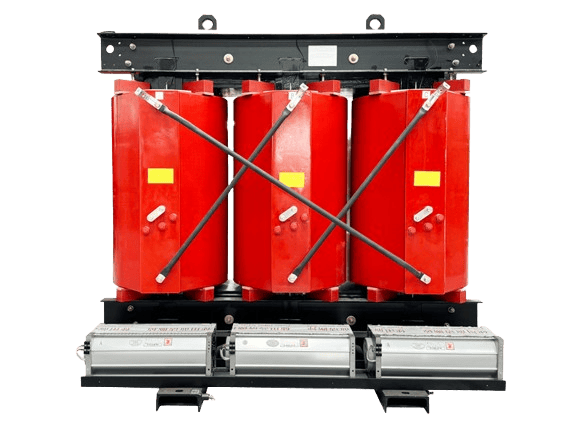
Electrical Power Transformer Manufacturers in Kenya
- DESCRIPTION
Dry Type Transformer Kenya — The Smart Choice for Kenya’s Modern Infrastructure
Kenya has a different kind of electricity story from most African nations. While other countries are still fighting for basic grid access, Kenya is simultaneously connecting rural villages through the Last Mile Connectivity Project AND building East Africa’s most sophisticated data centres, green-certified office towers, and smart hospital complexes in Nairobi’s Upper Hill and Westlands districts.
Both ends of this spectrum share one requirement — a Dry Type Transformer Kenya that performs reliably, safely, and efficiently without the fire risk, environmental liability, or maintenance burden of oil-filled alternatives.
Tirupati Transformers Pvt. Ltd. manufactures and exports Dry Type Transformers to Kenya built specifically for this dual reality — from Nairobi’s Silicon Savannah tech campus to Kisumu’s lakeside industrial facilities and Mombasa’s port-adjacent warehousing complexes.
Kenya’s Power Grid — Unique Characteristics That Affect Transformer Choice
Kenya’s grid has characteristics that make transformer selection genuinely different from other East African markets — and understanding these characteristics is essential before specifying any Dry Type Transformer Kenya.
Geothermal Dominance: Kenya generates approximately 47% of its electricity from geothermal sources — primarily the Olkaria fields in the Rift Valley operated by KenGen. Geothermal power produces exceptionally stable, clean electricity with very low harmonic content. This means Dry Type Transformer Kenya connected to geothermal-sourced KPLC supply experience less insulation stress from harmonics than equivalent units in countries dependent on diesel or coal generation — extending service life beyond the standard 25-year design expectation when correctly specified.
Kenya Power and Lighting Company (KPLC): All distribution connections in Kenya go through Kenya Power (KPLC) — the sole electricity distributor operating 11kV and 33kV networks across the country. Every Dry Type Transformer in Kenya must comply with KPLC’s technical connection standards — vector group Dyn11, 50Hz, specific protection relay requirements, and metering configurations. Tirupati engineers every Dry Type Transformer for Kenya to meet KPLC’s published connection standards precisely.
Energy and Petroleum Regulatory Authority (EPRA): Kenya’s Energy and Petroleum Regulatory Authority (EPRA) regulates all energy equipment imports and installations. EPRA requires IEC 60076-11 compliance for dry type transformers operating in Kenya’s power network — a standard Tirupati satisfies with full factory test documentation provided for every Kenya shipment.
Altitude Variation: Kenya’s geography creates an extraordinary altitude range — Mombasa sits at sea level while Nairobi operates at 1,795m above sea level, and parts of the Aberdare Range exceed 3,000m. Altitude affects transformer cooling efficiency — at higher altitudes, air is less dense, reducing the cooling capacity of AN (Air Natural) cooling systems. Our Dry Type Transformer Kenya are derated and re-rated for the specific altitude of your Kenya installation site, ensuring the nameplate rating is achievable at your actual operating conditions.
Kenya’s Green Building Revolution — Why Dry Type is the Only Option
Nairobi is experiencing a green building revolution that is reshaping electrical infrastructure specifications across the city. The Kenya Green Building Society certifies buildings to international green standards — and oil-filled transformers in basement electrical rooms are incompatible with green building certification because of fire risk, potential groundwater contamination from oil leaks, and the environmental liability of oil disposal at end-of-life.
Every new-generation commercial building in Nairobi’s business districts — Garden City, Two Rivers, Westgate, and the emerging Tatu City development — specifies Dry Type Transformer Supplier Kenya as standard. Architects and MEP consultants in Kenya’s green building sector have made this transition essentially mandatory for any building seeking EDGE, LEED, or BREEAM certification.
The Dry Type Transformer Kenya market has grown significantly alongside this green building trend — and Tirupati Transformers has positioned our product range to serve this market with epoxy cast resin and VPI units that qualify for all major green building certification schemes. Our units contain no oil, produce no hazardous waste, and operate with zero risk of soil or groundwater contamination — meeting Kenya’s green building and environmental compliance requirements.
According to IEC 60076-11 — the international standard governing dry type transformers — Class F1 fire performance certification confirms self-extinguishing properties, making our Dry Type Transformer Kenya green buildings fully compliant with fire safety requirements under Kenya’s Building Code and the Kenya Fire and Rescue Service’s installation standards.
Tirupati — Specialist Dry Type Transformer Supplier for Kenya
Tirupati Transformers Pvt. Ltd. manufactures Dry Type Transformers for Kenya using two core technologies, selected based on your Kenya project’s specific environment and requirements:
Epoxy Cast Resin — For Kenya’s Demanding Environments:
Fully encapsulated solid epoxy windings — the highest protection level available in a Dry Type Transformer Kenya. Ideal for Mombasa’s port-adjacent facilities where salt air and humidity are persistent, Nairobi’s basement electrical rooms in high-rise buildings, and any Kenya installation where moisture, dust, or chemical vapour exposure is a concern. The epoxy encapsulation is permanent — it cannot delaminate, absorb moisture, or degrade under Kenya’s tropical conditions.
VPI (Vacuum Pressure Impregnated) — Kenya’s Cost-Effective Solution:
Windings impregnated under vacuum with high-grade varnish — excellent moisture and contamination resistance at a more competitive price point than full epoxy casting. The preferred choice for Kenya’s interior locations — Nairobi’s well-ventilated office substations, Kisumu’s commercial buildings, Nakuru’s industrial estates, and Eldoret’s growing manufacturing sector.
We supply Dry Type Transformer Kenya factory-direct — you deal with our manufacturing engineers, not with a trading intermediary. This means your Kenya project gets accurate technical specification guidance, not a catalogue selection.
Related products for Kenya projects: Distribution Transformer | Cast Resin Transformer | VPI Transformer | Compact Substation | Solar Inverter Duty Transformer | Servo Voltage Stabilizer
Key Features of Our Dry Type Transformer Kenya
- Zero oil — no fire risk, no groundwater contamination — green building compliant
- Altitude-derated ratings for Nairobi (1,795m) and high-altitude Kenya installations
- Epoxy or VPI insulation — resistant to Mombasa’s coastal humidity and salt air
- Class F1 self-extinguishing — Kenya Fire and Rescue Service compliant
- KPLC vector group Dyn11 standard — smooth utility connection approval
- IP54 enclosure available for Nairobi basement rooms and dusty industrial sites
- PTC thermistor with independent alarm and trip relay — 24/7 temperature monitoring
- AF forced cooling fans — auto-activate during Nairobi’s peak-load hours
- Compact footprint — fits Kenya’s space-constrained indoor electrical rooms
- Copper windings — maximum efficiency at Kenya’s high ambient temperatures
- Full IEC 60076-11, EPRA, and KPLC technical compliance documentation
Where Dry Type Transformers Are Deployed Across Kenya
Our Dry Type Transformer Kenya serve the country’s most demanding and high-profile installations:
Silicon Savannah — Nairobi’s Tech Sector:
Nairobi’s status as Africa’s tech capital means data centres, fintech offices, and co-working campuses in Westlands, Karen, and Upper Hill run 24/7 critical loads. Every minute of transformer failure costs thousands of dollars in lost uptime. Our Dry Type Transformer Kenya tech sector are specified for zero unplanned downtime — with redundant temperature monitoring, Class H insulation headroom, and AF cooling for continuous maximum-load operation.
Nairobi’s Healthcare Infrastructure:
Aga Khan University Hospital, Nairobi Hospital, Karen Hospital, and the expanding network of private medical facilities across Greater Nairobi specify Dry Type Transformer Kenya exclusively for their indoor electrical rooms — where oil leakage near medical gas systems, sterile environments, and patient areas would create immediate safety emergencies.
Mombasa Port and Industrial Area:
Kenya’s gateway to East Africa — Mombasa Port and the surrounding Industrial Area — presents the most aggressive environment for transformer insulation. Salt-laden Indian Ocean air, year-round humidity above 80%, and industrial dust create conditions where only fully encapsulated epoxy Dry Type Transformer Kenya provide adequate long-term protection for Kenya’s port infrastructure.
Tatu City and New Urban Developments:
Kenya’s new-generation satellite cities — Tatu City, Konza Technopolis, and the Nairobi Expressway corridor developments — are built to international green standards from the ground up. Every substation in these developments specifies Dry Type Transformer Kenya as standard — oil-filled units are not permitted in their building codes.
East African Breweries, Bamburi Cement, and Manufacturing:
Kenya’s large manufacturing companies — EABL’s brewery in Nairobi, Bamburi Cement in Mombasa, BAT Kenya in Nairobi — run continuous heavy industrial loads that require Dry Type Transformer Kenya for indoor factory substations where oil contamination of production areas is not acceptable.
Universities and Research Institutions:
University of Nairobi, Strathmore University, Jomo Kenyatta University, and Kenya’s growing network of technical training institutes specify Dry Type Transformer Kenya for campus electrical infrastructure — combining fire safety for student environments with the low maintenance that campus facilities teams require.
Quality Tests — Every Dry Type Transformer Before Kenya Shipment
Every Dry Type Transformer shipped to Kenya undergoes a comprehensive test programme per IEC 60076-11 and IS 11171 — the correct standards for dry type units. No oil tests are performed because our Dry Type Transformer Kenya contain absolutely no oil:
- Winding resistance — HV and LV individually measured
- Voltage ratio and phase relationship check
- No-load loss and magnetising current measurement
- Load loss and short-circuit impedance test
- Applied voltage withstand (separate source) — HV and LV to earth
- Induced overvoltage withstand — AC test
- Insulation resistance (Megger) — all winding combinations
- PTC thermistor resistance and continuity check
- AF fan rotation and continuity check
- Enclosure IP rating verification
- Fire class F1 material certification
- Altitude derating calculation verification for site elevation
Complete IEC 60076-11 test report, EPRA-format technical datasheet, KPLC connection compliance document, and full installation manual provided with every Kenya shipment.
FAQs — Dry Type Transformer Kenya
Q1. How does Kenya’s high altitude affect Dry Type Transformer performance in Nairobi?
Altitude is one of the most overlooked factors in Dry Type Transformer Kenya specification. At Nairobi’s elevation of 1,795m above sea level, air density is approximately 80% of sea level — meaning AN (Air Natural) cooled Dry Type Transformer Kenya lose approximately 15–20% of their nominal cooling capacity compared to sea level operation.
A Dry Type Transformer specified at 1,000 KVA nameplate rating at sea level may only safely deliver 820–850 KVA continuously at Nairobi’s altitude without thermal overload risk. Tirupati Transformers corrects for this by applying IEC 60076-11 altitude derating factors during the design stage — every Dry Type Transformer we supply to Kenya’s high-altitude locations is rated at the correct derated capacity for the actual installation site elevation, ensuring the rated output is achievable without insulation stress.
Q2. Why are Dry Type Transformers mandatory for green-certified buildings in Kenya?
Kenya’s green building certification schemes — EDGE (Excellence in Design for Greater Efficiencies), LEED, and BREEAM — evaluate buildings on energy efficiency, water conservation, and environmental impact. Oil-filled transformers fail on two counts: they carry a fire risk that increases insurance premiums and violates green building safety criteria, and they present an environmental liability through potential oil leakage into soil and groundwater — which disqualifies buildings from environmental compliance certification.
A Dry Type Transformer Kenya contains no oil, generates no hazardous waste, passes Class F1 fire tests, and has a 25–30 year service life with zero liquid maintenance. This makes Dry Type Transformers not just preferred but effectively mandatory for any Kenya building seeking green certification under the Kenya Green Building Society’s standards.
Q3. What KPLC technical requirements must a Dry Type Transformer in Kenya meet?
Kenya Power (KPLC) requires Dry Type Transformer Kenya to comply with the following minimum specifications for utility connection approval: vector group Dyn11, 50Hz frequency, IEC 60076-11 test certification, rated voltage matching the local 11kV or 33kV distribution network, short-circuit impedance within KPLC’s published tolerance range, and protection relay settings compatible with KPLC’s network protection coordination.
Additionally, KPLC requires a metering current transformer on the HV side for tariff metering. Tirupati Transformers provides a full KPLC technical compliance datasheet with every Dry Type Transformer exported to Kenya, making the utility connection approval process straightforward for our Kenyan clients.
Q4. How does a Dry Type Transformer handle Mombasa’s coastal humidity and salt air?
Mombasa’s coastal environment — consistent humidity above 85% and salt-laden Indian Ocean air — is one of the most aggressive environments for electrical insulation in East Africa. Standard varnish-impregnated windings absorb moisture over time in these conditions, reducing dielectric strength and shortening transformer life.
For Dry Type Transformer Kenya installations in Mombasa and the Coast Province, Tirupati recommends epoxy cast resin technology — where the windings are fully encapsulated in solid epoxy, creating a permanent moisture barrier that cannot be penetrated by Mombasa’s coastal humidity or salt air. The epoxy encapsulation is maintenance-free and does not require periodic re-varnishing — delivering 25+ years of reliable service in Kenya’s most challenging coastal environments without degradation.
Q5. What is the delivery process for a Dry Type Transformer to Kenya?
Standard delivery for a Dry Type Transformer to Kenya from Tirupati’s India factory is 6 to 9 weeks from order confirmation — 5 to 7 weeks manufacturing plus approximately 14–18 days sea transit to Mombasa Port. Kenya benefits from excellent direct shipping connections between India’s major ports (JNPT Mumbai and Chennai) and Mombasa — one of East Africa’s busiest and most efficient container ports.
Our export team prepares complete documentation: IEC 60076-11 test report, EPRA compliance certificate, Certificate of Origin, commercial invoice, packing list, and bill of lading. From Mombasa Port, our logistics partner handles inland transport to Nairobi, Kisumu, Nakuru, Eldoret, or any other Kenya project location. Dry Type Transformer Kenya buyers receive shipping updates and arrival notifications throughout the transit period.
Order Your Dry Type Transformer for Kenya — Response in 24 Hours
Kenya’s construction timelines move fast — Nairobi’s developers, contractors, and MEP consultants cannot afford transformer procurement delays. Share your KVA rating, primary and secondary voltage, enclosure class, insulation technology preference (epoxy or VPI), Kenya installation altitude, and delivery location. Tirupati Transformers commits to a complete factory quotation, technical drawings, altitude derating calculations, and shipping schedule within 24 hours. Contact Us for Dry Type Transformer Kenya Inquiry.
- Routine Measurements and TestsRoutine tests shall be carried out on all transformers conducted accordance with standards as applicable. The following routine measurements and tests shall be carried out:
- Measurement of winding resistance
- Measurement of voltage ratio and check of polarity and vector group
- Measurement of impedance voltages
- Measurement of load losses
- Measurement of no load losses and no load current
- Measurement of harmonics induced overvoltage withstand test
- Separate source voltage-withstand tests on HV and LV windings
- Bushing routine tests
- Oil Leakage Test
- Relief Device Test
- Dielectric Routine Tests
- Galvanizing Tests
- Magnetic Balance Tests
- Induced over voltage withstand Tests
- Tap changer Tests
- Oil Tests.
- Fittings and AccessoriesWe provide following fittings and accessories with all transformers:
- Oil Temperature Indicator (OTI)
- Winding Temperature Indicator (WTI)
- Magnetic Oil-level Gauge (MOG)
- Pressure Relief Device (PRD)
- Marshalling Box
- Forced Fan Cooling
- OLTC & RTCC Panel with AVR
- Bi-directional Rollers
- Radiator Valves
- Dehydrating Breather
- Current Transformer
- Additional Neutral Terminal.
- TECHNICAL SPECIFICATION
Brand Tirupati Transformer Rating Upto 10 MVA Applicable Standards IS, IEC, BIS etc. Cooling ONAN, ONAF Insulating Fluid Mineral Oil To Specification Frequency 50 Hz, 60 Hz Primary Voltage 11KV/ 22 KV/ 33 KV Winding Material Copper ping On Load Tap Changer, Off Circuit Tap Changer Impedance Upto 8.35%, tolerance +10% Insulation Class ‘A’ Rated Voltage HV 33 KV LV 11 KV Highest Continuous system voltage Maximum system voltage ration (HV/LV) 36 KV / 12 KV Rated Voltage Ration (HV/LV) 36 KV / 11 KV Method of Connection HV Delta LV Star