 Sushil Singh 2 July 2026
How to Choose the Right Transformer Manufacturer: 10 Common Mistakes Buyers Should Avoid
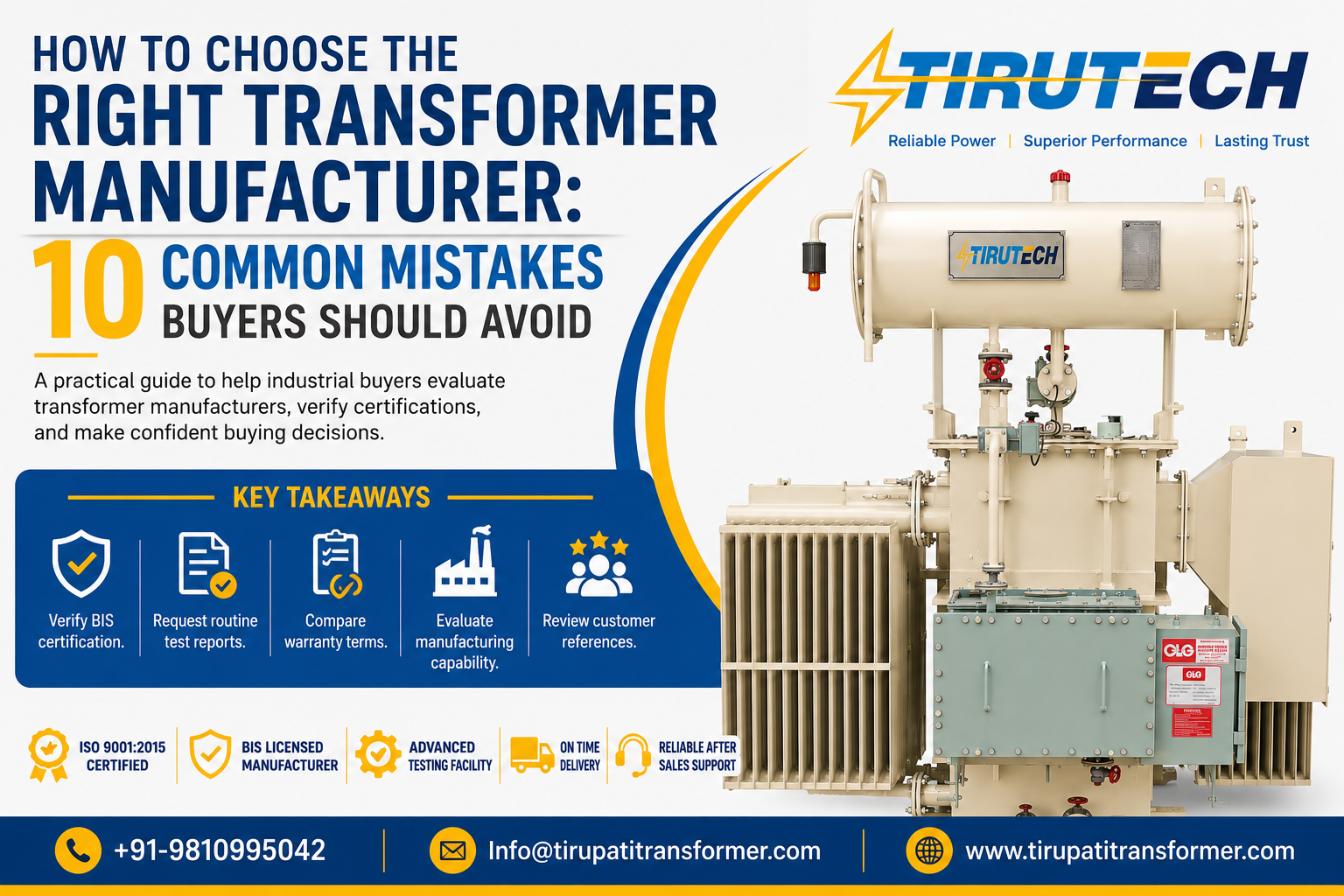
The most common mistake industrial buyers make is selecting a transformer manufacturer based on price alone, without verifying BIS certification, testing documentation, or after-sales support. This guide walks through ten mistakes to avoid so you can make an informed purchasing decision with confidence.
Key Takeaways
- Verify BIS certification.
- Request routine test reports.
- Compare warranty terms.
- Evaluate manufacturing capability.
- Review customer references.
Who Should Read This Guide?
This guide is written for procurement managers, EPC contractors, electrical consultants, project engineers, facility managers, factory owners, infrastructure developers, and industrial buyers who are planning to purchase a power transformer or distribution transformer. Whether you are setting up a new manufacturing plant, expanding electrical infrastructure, replacing an aging transformer, or comparing quotations from multiple transformer manufacturers, this guide provides a practical framework for making an informed purchasing decision.
It is especially useful for buyers who want to reduce project risks, ensure compliance with industry standards, and invest in reliable transformer solutions with long-term performance and after-sales support.
Whether you are purchasing a transformer for a new industrial facility, expanding an existing electrical network, replacing aging equipment, or evaluating multiple supplier quotations, this guide will help you assess manufacturers, compare technical capabilities, verify certifications, and make an informed buying decision based on quality, compliance, and long-term reliability.
How to Choose the Right Transformer Manufacturer: A Complete Buyer’s Checklist
A transformer manufacturer certification checklist is a short set of verification steps, covering BIS license validity, ISO 9001:2015 certification, and routine test documentation, that buyers use to confirm a supplier’s claims before finalising a purchase. Working through this checklist typically takes a day or two but significantly reduces the risk of premature transformer failure.
Checklist Includes:
- BIS License Verification
- ISO 9001:2015 Certification
- Routine Test Reports
- Warranty Documentation
- Manufacturing Facility
- Customer References
Mistake 1: Are You Choosing a Transformer Manufacturer Based on Price Alone
Yes, and this is the single most expensive mistake in transformer procurement. Price comparisons that ignore certification, testing, and warranty terms often look attractive on paper but ignore the total cost of ownership. A transformer that fails within its first two years of operation costs far more in downtime, emergency repairs, and lost production than the amount saved at purchase.
Before comparing quotations on price, confirm that every supplier is quoting for the same certification level, testing scope, and warranty terms, otherwise the comparison is not a fair one. Understanding how to choose the right transformer manufacturer starts with looking beyond the lowest quote.
Mistake 2: Have You Skipped BIS License Verification
This is a frequent and costly oversight. Many buyers accept a printed certificate at face value without cross-checking the license number on the BIS website. A manufacturer’s license can be limited to specific product categories or capacity ranges, so a valid license for one product type does not guarantee coverage for another. Always ask for the license number in writing and verify it independently before placing an order.
Mistake 3: Are You Ignoring BIS Certification and Quality Management Systems?
These are frequently overlooked because BIS certification is legally mandatory while these two are not. However, ISO 9001:2015 demonstrates that the manufacturer follows a documented quality management system covering design, production, inspection, and continual improvement. Buyers should also request routine test reports and other applicable technical documentation relevant to the product they are purchasing. Buyers who verify BIS certification, ISO 9001:2015 certification, routine test reports, and technical documentation are generally better positioned to select a reliable transformer manufacturer.
It is also worth noting that some manufacturers advertise “BIS approved” language loosely without specifying which product category or capacity range the approval actually covers, so asking for the precise scope of each certification avoids relying on marketing language alone.
Mistake 4: Have You Checked the Manufacturer’s Track Record and Experience
Stated years in business mean little without evidence. Ask how many years the manufacturer has actively held its current BIS license, how many transformers of your required capacity they have delivered, and whether they can provide references from clients in a similar industry or region. A manufacturer with genuine experience across varied grid conditions, such as export markets or multiple states, is generally better equipped to handle site-specific challenges.
Mistake 5: Are You Overlooking After-Sales Support and Response Time
Many buyers focus entirely on the purchase transaction and overlook what happens after installation. Ask specifically how the manufacturer handles spare parts requests, technical troubleshooting, and site visits for warranty claims. A manufacturer located far from your facility may offer a lower price but slower response time during an emergency, which can extend downtime significantly compared to a regional supplier with faster turnaround. It is worth asking for a written estimate of typical response times for both routine queries and emergency situations before signing, since verbal assurances during the sales process do not always match actual post-installation experience.
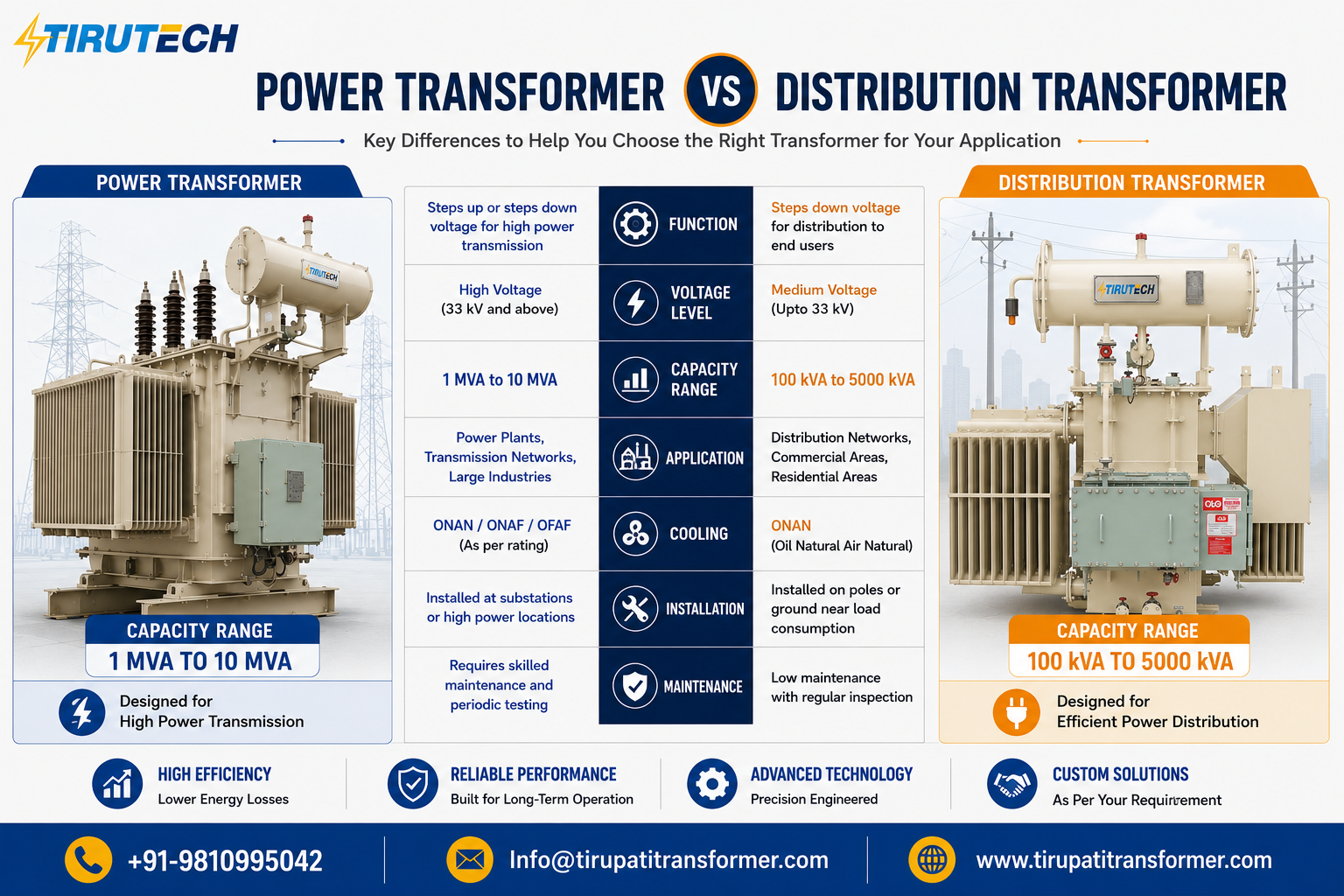
Mistake 6: Have You Chosen the Wrong Transformer Type for Your Application
Oil-cooled and dry-type transformers serve different purposes, and picking the wrong one can create compliance or safety issues. Dry-type units are typically required for indoor installations and fire-safety-restricted spaces, while oil-cooled units suit outdoor and open-yard installations. A reliable supplier will ask about your installation site and fire safety requirements before recommending a configuration, rather than defaulting to whichever type is easiest to produce.
Mistake 7: Have You Miscalculated Your Load Requirements
Undersizing causes overheating and premature failure; oversizing wastes capital. Buyers sometimes estimate load requirements informally instead of sharing a detailed sanctioned load and future expansion plan with the manufacturer. A proper specification process involves sharing your connected load, expected growth, and plant layout so the manufacturer can recommend an appropriately sized unit rather than a generic capacity. This is particularly important for facilities planning phased expansion, where a slightly larger capacity today can avoid the cost and disruption of a full replacement within a few years.
Mistake 8: Did You Skip Requesting Routine Test Certificates
This documentation should always come standard, never as an afterthought. Every BIS-compliant transformer should ship with documented results for ratio testing, insulation resistance, and short-circuit withstand capability. Some buyers accept delivery without requesting this documentation, assuming it exists somewhere in the manufacturer’s records. Always request these certificates as part of standard delivery, not as an afterthought raised only if a problem arises later.
Mistake 9: Are Your Warranty Terms Only Verbal
A verbal assurance offers no protection if a dispute arises later. Warranty terms, including duration, coverage scope, and the process for filing a claim, should be documented in writing as part of the purchase order. Buyers who skip this step sometimes discover during a warranty claim that the coverage they assumed does not match what was actually agreed. A written warranty document also makes it easier to hold the manufacturer accountable, since disputes over undocumented verbal terms are difficult to resolve fairly for either side.
Mistake 10: Have You Skipped Checking References From Past Clients
A confident supplier will share references without hesitation. Buyers who skip this step rely entirely on the manufacturer’s own claims rather than independent verification from existing clients in a similar sector or region. A short reference call, asking about delivery timelines, product performance, and after-sales responsiveness, often reveals more than any marketing material.
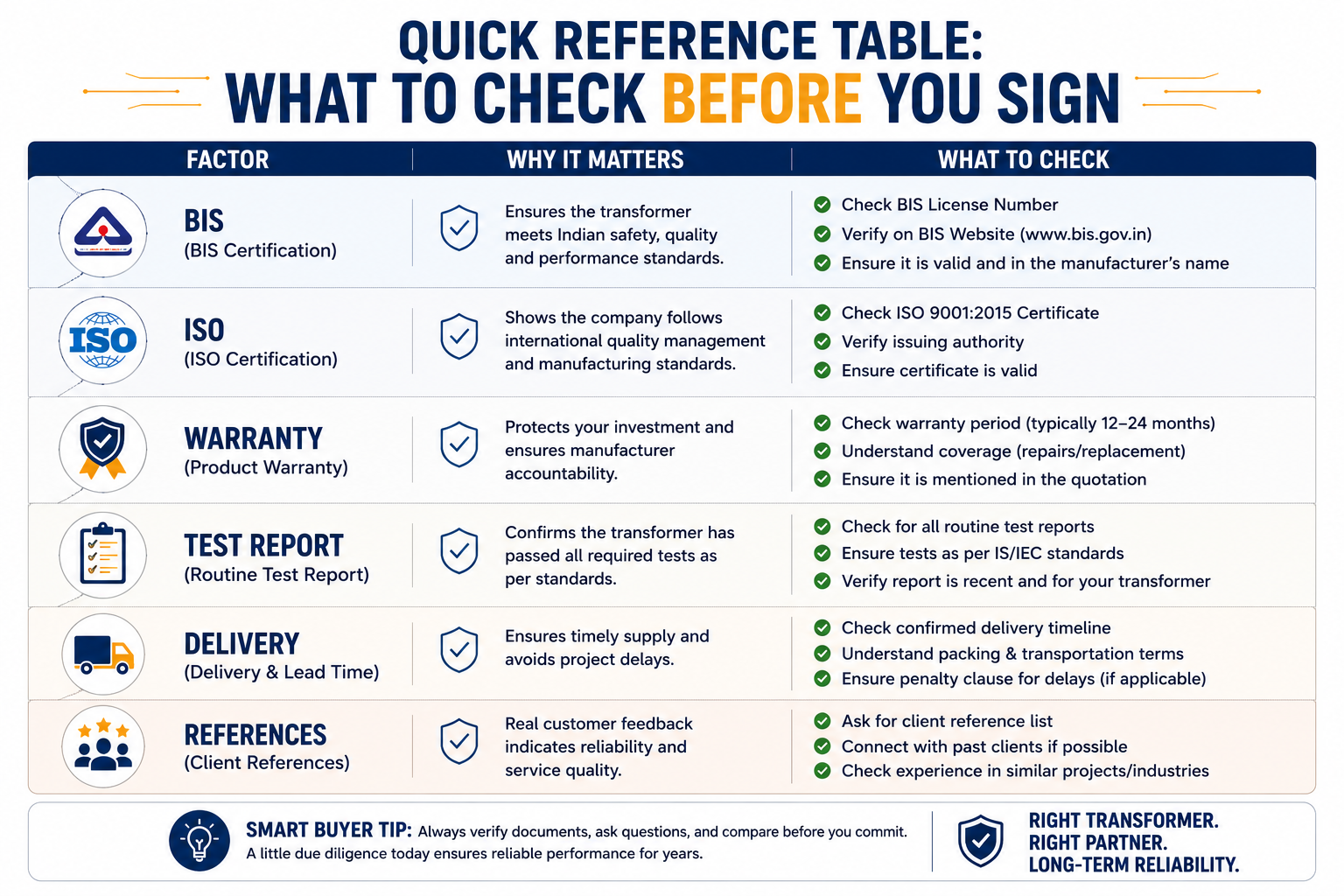
Quick Reference Table: How to Choose the Right Transformer Manufacturer
| Check Point | Why It Matters | Red Flag to Watch For |
| BIS License Number | Confirms legal compliance and applicable product certification. | Supplier cannot provide a verifiable license number. |
| ISO 9001:2015 Certification | Demonstrates a documented quality management system. | No valid ISO certificate available on request. |
| Routine Test Certificates | Verifies that the supplied transformer has undergone required factory tests. | Certificates are unavailable or only promised after delivery. |
| Manufacturing Capability | Shows the supplier has the facilities and expertise to produce the required transformer. | Limited production capability or outsourced manufacturing without transparency. |
| Warranty Terms in Writing | Defines the scope and duration of warranty support. | Warranty terms are only discussed verbally. |
| Customer References | Provides independent evidence of previous project performance. | Supplier is unwilling or unable to share references. |
How This Checklist Was Put Together
This checklist reflects patterns observed across more than a decade of manufacturing and supplying transformers to industrial clients throughout NCR, along with export markets across more than 20+ countries in Africa and the Middle East. Rather than generic advice, each mistake listed here corresponds to a specific, recurring gap we have seen in buyer procurement processes, from skipped license checks to verbal-only warranty agreements. Based on our experience, many industrial buyers who contact us after an unsuccessful procurement mention missing certification checks, incomplete documentation, or unclear warranty terms.
A Real Scenario: What Happens When These Mistakes Are Made
A mid-sized manufacturing unit expanding its production line once sourced a distribution transformer purely on price and delivery speed, skipping license verification and routine test documentation entirely. Within six months, the unit experienced overheating under sustained load, leading to insulation failure and a multi-day production stoppage while a replacement was sourced. A verification process that would have taken a single day before the purchase could have flagged the gap in quality assurance well before it became a costly failure.
This kind of scenario is common enough that building a short verification checklist into procurement, rather than treating it as optional paperwork, is one of the most practical risk-management steps an industrial buyer can take. This is why knowing how to choose the right transformer manufacturer matters before signing any purchase order.
Frequently Asked Questions
What is the biggest mistake buyers make when choosing a transformer manufacturer?
Choosing based on price alone without verifying BIS certification, testing documentation, and warranty terms is the most common and costly mistake, since it often leads to higher long-term costs from downtime and premature failure.
How long does it take to verify a manufacturer’s certifications?
Checking a BIS license number typically takes a few minutes, and a credible manufacturer should provide test certificates and other documentation within a day of request.
Should I always choose the transformer manufacturer with the lowest quote?
Not without first confirming that all suppliers are quoting for the same certification level, testing scope, and warranty terms, since an unusually low quote often reflects reduced compliance or testing rather than genuine cost efficiency. A fair comparison requires normalising quotations against identical specifications before price becomes the deciding factor.
Is it necessary to check ISO and BIS certification if BIS certification is already confirmed?
Yes, since BIS certification alone does not verify the manufacturer’s broader quality management system or independent type testing, both of which ISO 9001:2015 and BIS approval provide.
How do I choose the right transformer manufacturer?
How to choose the right transformer manufacturer involves more than comparing prices. Buyers should evaluate the manufacturer’s industry experience, BIS certification (where applicable), ISO 9001:2015 certification, manufacturing capabilities, routine test reports, warranty terms, delivery performance, and after-sales support. Selecting a manufacturer with proven technical expertise and transparent documentation helps ensure long-term reliability, safety, and lower operating costs.
What documents should I request before purchasing a transformer?
Before placing an order, buyers should request the product technical datasheet, routine test reports, warranty terms, quality certifications, nameplate details, delivery schedule, and installation or maintenance guidelines. Reviewing these documents helps verify product quality, confirms compliance with project requirements, and reduces the risk of unexpected issues after installation.
Choose a Certified Transformer Manufacturer You Can Verify
If you are still deciding how to choose the right transformer manufacturer, start with one you can verify. Tirupati Transformers is a BIS-licensed and ISO 9001:2015 certified transformer manufacturer established in 2014. We serve industrial clients across India and export transformer solutions to more than 20+ countries. Our team can provide license details, routine test reports, and technical documentation upon request. Call +91-9810995042 or write to info@tirupatitransformer.com for a specification-based quotation.
For independent verification of manufacturer licenses, visit the Bureau of Indian Standards website. For broader technical reference on transformer standards, the Central Electricity Authority also publishes relevant guidelines.